Author: admin

  • Why Documentation Can Matter in Legal Disputes Explained

    Why Documentation Can Matter in Legal Disputes Explained

    Did you know over 80% of civil cases rely on written evidence? When you’re in court, your memory might not be enough. This is why documentation is key in legal disputes to prove your story.

    Having a clear paper trail is your primary shield against doubt. Organized records turn vague claims into solid facts. This makes judges and juries trust you more. Taking these steps early keeps your rights safe in the U.S. court system.

    Save contracts, emails, and receipts to feel secure. You never know when a simple agreement could become a big issue. Start organizing your files today to protect your future.

    Key Takeaways

    • Written evidence often outweighs verbal accounts in court.
    • Organized records serve as your strongest defense during litigation.
    • Proactive filing prevents loss of critical information.
    • Clear paper trails help verify your claims effectively.
    • Early preparation protects your rights within the American system.

    Understanding Why Documentation Can Matter in Legal Disputes

    Being in a legal fight often depends on how well you prepare. Knowing why documentation is key in legal disputes helps protect your rights. Without solid records, even strong cases can falter in court.

    A serene office setting, showcasing a wooden desk cluttered with neatly organized legal documents, folders, and a laptop glowing softly in the warm afternoon light. In the foreground, a focused professional in formal business attire is reviewing a contract with a look of contemplation. The middle layer captures a view of the room, featuring shelves lined with law books, a potted plant providing a touch of green, and framed certificates on the wall, symbolizing expertise and credibility. The background reveals a large window allowing natural light to fill the room, illuminating the space and creating a calm atmosphere. The overall mood conveys diligence and the significance of documentation in legal disputes, emphasizing clarity and professionalism.

    The Foundation of Your Legal Credibility

    Your credibility is your strongest asset in court. Judges and juries need consistency. Legal documentation importance is huge here. Good records show your claims are based on facts, not guesses.

    Think of your documents as the backbone of your arguments. They provide a clear timeline of events. This preparation shows you’re serious, organized, and truthful.

    How Records Transform Memories into Evidence

    Human memory is weak and can change. The impact of documentation in court cases is that it captures a moment in time. It gives an unbiased account that doesn’t fade or change.

    Without records, your memory can raise doubts. But, records turn personal stories into verifiable facts. This shift can make all the difference between a dismissed claim and a win.

    Feature Undocumented Claim Documented Claim
    Reliability Subjective and fading Objective and permanent
    Court Perception Often viewed with skepticism Accepted as professional evidence
    Outcome High risk of dismissal Stronger chance of success
    Significance Minimal impact High legal value

    The significance of records in legal disputes is clear. They make proving your case easier. By keeping detailed records, you ensure your case stays strong, no matter when you go to court.

    Key Types of Documentation That Strengthen Your Case

    Knowing which documents are most important is key when facing a legal battle. Understanding the legal documentation importance early helps build a strong case. By collecting specific records, you turn your story into a solid argument.

    Financial Records and Transaction Histories

    Why bank statements and receipts provide objective proof

    Financial records are vital in many legal cases. Bank statements show your financial situation or losses clearly. This legal evidence documentation is hard to argue against because it’s based on real data.

    Keep all receipts and invoices in order by date. These documents prove your claims about expenses or damages. A detailed transaction history helps your legal team figure out the right settlement amount.

    Communication Logs and Correspondence

    The importance of saving emails, texts, and letters

    Digital chats often reveal the most about a dispute. The crucial role of documentation in lawsuits is clear in emails and texts. Save all important messages, keeping the time and sender info intact.

    Don’t delete messages, even if they seem small. A single text can clarify a misunderstanding or prove a promise. Consistency in your communication logs helps build a reliable timeline.

    Professional Reports and Medical Records

    Using expert documentation to validate your claims

    Expert reports are essential for cases involving personal injury or professional negligence. The importance of written evidence in legal matters is huge when it comes from experts. Medical records, for example, offer a detailed look at your health status.

    Collect detailed reports from doctors, therapists, or industry experts. These documents provide the technical support needed for your claims. By organizing these reports, you show your case is backed by professional analysis, not just personal opinion.

    Document Category Primary Benefit Evidence Type
    Financial Records Quantifies losses Objective
    Communication Logs Establishes intent Contextual
    Medical Reports Validates injury Expert
    Professional Files Confirms facts Technical

    Common Pitfalls When Managing Your Legal Records

    You might think your records are in order, but small mistakes can significantly impact the outcome of your case. Many people underestimate how easily a missing receipt or a misplaced email can derail their legal strategy. Avoiding these common errors is essential for maintaining a strong position.

    The Dangers of Incomplete or Disorganized Files

    When you fail to maintain a clear trail of your history, the impact of documentation in court cases can be devastating. Judges and juries rely on concrete facts, not vague recollections. If your files are scattered or incomplete, you risk losing credibility during critical testimony.

    “The strength of your argument is only as good as the evidence supporting it. A disorganized file is a missed opportunity for justice.”

    To avoid these issues, consider these common mistakes:

    • Failing to date every document or note.
    • Mixing personal correspondence with professional records.
    • Losing original copies of contracts or agreements.

    Protecting Your Privacy While Maintaining Transparency

    Balancing the need for openness with your right to privacy is a delicate task. You must understand the importance of written evidence in legal matters without exposing sensitive personal data. Always redact information that does not pertain to the specific dispute at hand.

    Transparency does not mean total disclosure of your entire life. Focus on providing only what is necessary to support your claims. This approach keeps your case focused and protects your personal boundaries.

    Digital Storage Best Practices for Legal Safety

    Modern legal evidence documentation requires more than just a physical folder. Using secure, encrypted cloud storage ensures that your files remain accessible to your legal team while staying protected from unauthorized access. Always enable two-factor authentication on any platform housing sensitive data.

    Proper documentation in legal proceedings also involves regular backups. Never rely on a single device to store your evidence. By keeping multiple digital copies in secure locations, you ensure that your case remains intact even if a computer fails or a file is accidentally deleted.

    Conclusion

    Keeping your records organized is your best defense against legal problems. It gives you peace of mind, knowing your rights are protected. Records are key when you face unexpected lawsuits.

    By keeping clear, easy-to-find files, you can influence the outcome of your case. The right documents can help you win in court. Your attention to detail is your shield against uncertainty.

    Documentation helps your lawyer navigate your case. It makes complex arguments simple with solid evidence. This clarity helps your lawyer build a strong strategy for you.

    Good documentation does more than help in court. It saves time and reduces stress by having everything ready. Start organizing your files today to protect your future.

    Check your filing system and find any missing records. If you’re unsure, talk to a legal expert. Your effort now will help you succeed later.


    FAQ

    Why is legal documentation importance so central to winning a dispute?

    When you’re in a legal fight, your word is often compared to someone else’s. Legal documents are key because they offer a clear, third-party view of what happened. They help prove your side of the story, making it hard for others to deny your claims.

    What is the impact of documentation in court cases compared to personal testimony?

    While your story is important, memories can be shaky and easily questioned. Documents, on the other hand, are solid proof. A judge or jury trusts a signed contract or a timestamped email more than a memory from months ago.

    How does legal evidence documentation help during the discovery process?

    During a lawsuit, both sides share important information. Having your documents ready, like bank statements, helps you respond quickly and confidently. This shows you’re professional and transparent, which can lead to a better settlement before court.

    What is the significance of records in legal disputes involving digital communication?

    In today’s digital world, records are very important. Saving messages on Slack or WhatsApp can be key evidence. Keeping these records ensures you have solid proof to protect your interests.

    What is the critical role of documentation in lawsuits regarding medical or professional claims?

    For health or professional negligence cases, documents are essential. Records from places like the Mayo Clinic add credibility to your claims. These reports provide a clear, unbiased view that matters a lot in court.

    Why is the importance of written evidence in legal matters greater than verbal agreements?

    Verbal agreements are hard to prove. Written evidence, like a formal letter, is permanent and clear. It outlines agreements without room for misunderstanding.

    How does documentation in legal proceedings protect your privacy and transparency?

    Good documentation helps you share the right information while keeping private data safe. Organizing files on secure platforms like Dropbox helps you control what you share. This way, you meet court requirements without exposing too much.

    What are the benefits of proper documentation in legal disputes for long-term safety?

    Proper documentation gives you peace of mind. Keeping records, like receipts from Amazon, builds a strong defense. This way, you’re ready for any future disputes without scrambling for proof.
  • What to Consider When Choosing a Law Firm for Your Case

    What to Consider When Choosing a Law Firm for Your Case

    Did you know nearly 70% of legal outcomes depend on your first lawyer? This shows why picking the right lawyer is critical for your future. The legal world can seem scary, but you don’t have to go through it alone.

    Knowing what to consider when choosing a law firm lets you move forward with confidence. By looking at certain criteria before agreeing to work with a lawyer, you protect your interests. This way, you make sure you have the support you need.

    This guide explains the key things to look at. Learning what to consider when choosing a law firm helps you feel clear and calm during tough times.

    Key Takeaways

    • Assess the attorney’s specific experience with your type of case.
    • Review fee structures clearly before signing any contracts.
    • Check professional credentials and local bar standing.
    • Evaluate communication styles to ensure they match your needs.
    • Trust your instincts regarding the comfort level during consultations.

    Essential Factors for What to Consider When Choosing a Law Firm

    Finding the right law firm can make a big difference. By using law firm selection tips, you can find a firm that meets your needs. Evaluating key factors will help you avoid stress and get the best results for your case.

    A visually striking scene illustrating the essential factors in selecting a law firm. In the foreground, a diverse group of professional individuals in business attire are discussing important documents at a sleek conference table. In the middle ground, a large wall display showcases key factors like experience, specialization, and reputation through engaging infographics. The background features tall windows with cityscape views, allowing natural light to fill the room, creating a bright and optimistic atmosphere. The lens captures a slightly elevated angle to emphasize both the people and the display, providing a dynamic perspective. The mood is focused and collaborative, conveying a sense of professionalism and decision-making.

    Assess the Firm’s Specialization and Experience

    Choosing a law firm means looking at their expertise. Not all lawyers handle every case. So, pick a firm with a proven track record in your area of law.

    Experience leads to better case management and understanding of local courts. When interviewing lawyers, ask about their experience with similar cases. A specialized firm will have the skills to handle complex legal issues.

    Review Fee Structures and Billing Transparency

    Clear financial information is key in a lawyer-client relationship. Look at fee structures early to ensure complete billing transparency. Knowing how a firm charges helps avoid surprise costs later.

    Always ask for a written agreement that explains billing. If a firm is unclear about costs, it’s a warning sign. Clear communication about money lets you focus on your case without worry.

    Verify Credentials and Professional Standing

    Before signing, check your lawyer’s credentials. Make sure they are in good standing with the state bar association. A clean record means you’re working with a reputable lawyer.

    State bar websites have tools to check an attorney’s license status. This is a key best law firm selection criteria to protect your interests. A licensed and respected lawyer is essential for your case.

    Evaluation Category High Priority Moderate Priority Low Priority
    Specialization Matches your case General practice No experience
    Fee Transparency Clear written contract Verbal estimates Vague billing
    Professional Standing Clean record Minor issues Disciplinary history

    Evaluating Reputation and Communication Styles

    When picking a reputable law firm, look beyond their skills. How they treat clients and manage expectations is key. Understanding these soft skills is essential in choosing the right law firm for you.

    Research Client Reviews and Case Results

    Begin by checking online reviews and past results. Reviews give insight into client experiences, showing both good and bad points. Look for how the firm handles tough situations and stays professional.

    Also, check their success in cases like yours. A firm with a strong track record in your area shows reliability and effectiveness. This helps you see if their past matches your goals.

    Determine the Firm’s Communication Philosophy

    Good communication is key in a lawyer-client relationship. You should know how often you’ll get updates and who to contact. Ask about their communication methods, like email, phone, or client portals.

    A firm that values transparency and accessibility keeps you informed. If you want quick responses, make sure the firm can handle it. Knowing their approach early avoids future problems.

    Assess Your Personal Comfort Level with the Attorney

    Choosing a lawyer is a personal decision that needs trust. You should feel free to ask questions and share personal info without worry. If you don’t click during the first meeting, it might not be the right fit.

    Trust your gut when judging comfort. A lawyer who listens well and shows empathy is better at fighting for you. Remember, you’re selecting a reputable law firm to be your partner. Choose someone who listens and respects you.

    Communication Feature Proactive Firm Reactive Firm
    Update Frequency Weekly scheduled reports Only when necessary
    Primary Contact Dedicated case manager Attorney only
    Response Time Within 24 hours 2-3 business days
    Preferred Channel Client portal/Email Phone calls only

    Conclusion

    Finding the right legal partner can change your case’s direction. You need someone who shares your goals and values your time. Choosing a law firm that fits you well is key to protecting your rights.

    When picking a law firm, your gut feeling is important. Trust your instincts when meeting with lawyers. A good connection can lead to better results and a less stressful experience.

    Remember the key things to look for in a law firm. Focus on clear communication and the lawyer’s expertise. This will give you the confidence to move forward. Finding the right lawyer today will bring you peace of mind for the future.

    FAQ

    What are the most important factors in picking a law firm for my legal needs?

    When choosing a law firm, focus on their expertise in your legal area. Also, look at their success rate and fee transparency. Make sure their experience matches your case needs for the best representation.

    How can I be sure I am choosing a law firm wisely when it comes to costs?

    Ask for a clear fee breakdown during your first meeting. Look for billing transparency, like flat fees or hourly rates. This helps avoid financial surprises later.

    Where can I verify an attorney’s credentials and professional standing?

    Check your state bar association website, like the State Bar of California or New York State Bar Association. You can search for an attorney by name to verify their license and check for disciplinary actions or malpractice claims.

    What should I look for in client reviews and past case results?

    Look for patterns in client feedback on Google Reviews, Avvo, or Martindale-Hubbell. Check if the firm has a good track record in cases like yours.

    Why is the firm’s communication philosophy one of the top considerations for law firm selection?

    Good communication is key in a legal partnership. Look for a firm that updates you regularly, whether by phone or digital portal. This ensures you’re always informed about your case.

    How do I evaluate the best law firm selection criteria during an initial meeting?

    Use the first meeting to check your comfort level. Look for an attorney who listens and shows genuine interest in your case. This rapport is essential for trusting their judgment.

    What are the final steps for what to consider when choosing a law firm before signing a contract?

    Before signing, review all selection criteria one last time. Make sure the attorney you met with will handle your case. Confirming these details ensures long-term satisfaction.
  • Emergency Funds: Where Should You Keep the Money?

    Emergency Funds: Where Should You Keep the Money?

    Did you know that nearly 40% of American adults would struggle to cover a sudden $400 expense without borrowing or selling assets? Life often throws curveballs when we least expect them, from sudden car repairs to unexpected medical bills.

    Building a financial safety net is your best defense against these unpredictable moments. By setting aside emergency savings, you gain peace of mind and protect your household from unnecessary debt.

    But, having cash isn’t enough. Choosing the right location for your emergency funds is a critical step in your overall planning journey. When you understand how to store these assets effectively, you can navigate life’s challenges with confidence and clarity.

    Key Takeaways

    • Unexpected costs can derail your budget without proper preparation.
    • A robust reserve acts as a buffer against life’s surprises.
    • Accessibility is just as important as the safety of your capital.
    • Strategic placement helps your reserves remain liquid yet secure.
    • Planning ahead reduces stress during difficult personal times.

    Top Financial Vehicles for Your Emergency Funds

    Finding the best place for emergency fund storage is key. You need growth and quick access. The right spot for your cash reserve keeps you ready without losing too much interest.

    A serene office space bathed in soft natural light, featuring a wooden desk neatly arranged with financial documents, a sleek calculator, and an open laptop displaying a graph of savings growth. In the foreground, a glass jar filled with an assortment of coins and bills labeled "Emergency Funds" sits prominently, symbolizing financial security. In the middle ground, a well-dressed business professional, wearing a crisp shirt and glasses, reviews the documents with a thoughtful expression, emphasizing the importance of planning for emergencies. The background includes a large window with a view of a calm cityscape, creating a sense of stability and peace. The overall mood is one of professionalism and preparedness, capturing the essence of smart financial planning.

    High-Yield Savings Accounts

    A high-yield savings account is a top pick for many. They offer higher interest rates than regular bank accounts. Plus, they’re FDIC-insured, making them safe for your liquid assets.

    Money Market Accounts

    Money market accounts mix savings and checking features. You get a debit card or check-writing, and earn good interest. They’re great for managing your emergency funds flexibly.

    Traditional Savings Accounts

    Traditional savings accounts are simple and reliable. They have lower interest rates but are easy to find. They’re perfect for keeping your money separate and easily accessible.

    Short-Term Certificates of Deposit

    Short-term CDs offer a fixed rate for a set time. They’re less flexible than a high-yield savings account but help you avoid spending on non-essentials. Just remember, early withdrawal can cost you.

    Account Type Interest Potentia Liquidity Level Best For
    High-Yield Savings High High Growth & Safety
    Money Market Moderate High Frequent Access
    Traditional Savings Low Very High Simplicity
    Short-Term CD Moderate Low Disciplined Saving

    Key Factors to Consider When Choosing Your Emergency Fund Options

    Choosing the best place for your emergency fund is more than just looking for high interest rates. You need to make sure your emergency savings are safe and easy to get to when you need them. By focusing on a few key principles, you can find the right place for your money.

    Prioritizing Liquidity for Immediate Access

    Liquidity means how fast you can turn your assets into cash without losing value. In emergencies, you don’t want to wait days for money to clear. Liquid assets are key because they provide quick relief for urgent needs like car repairs or medical bills.

    Balancing Interest Rates and Inflation

    You want your money to grow, but it also needs to be easy to get to. If your cash sits in a low-interest account, inflation can erode its value. Finding a balance between good interest rates and quick access is smart.

    “The goal of an emergency fund is not to get rich, but to stay secure during a crisis.”

    Ensuring FDIC or NCUA Insurance Protection

    Safety is the top priority for your emergency fund options. Always check if your bank or credit union is insured by the FDIC or NCUA. This insurance protects your money up to $250,000 per depositor, keeping it safe even if the institution has problems.

    Avoiding Penalties and Withdrawal Restrictions

    Some accounts offer high yields but have strict rules that can block your access. Stay away from accounts with heavy penalties or limits on transactions. Keeping your liquid assets free from these restrictions means your money is ready when you need it.

    Feature High-Yield Savings Traditional Savings
    Liquidity High Very High
    Interest Rate Competitive Low
    Safety FDIC/NCUA Insured FDIC/NCUA Insured

    Conclusion

    Protecting your future begins with today’s money choices. A strong financial safety net gives you the stability to handle life’s surprises with confidence.

    Check your cash reserve yearly to see if it fits your changing needs. Updating your plan helps you stay ready for new expenses or income shifts.

    Choosing the best emergency fund means picking one that’s easy to reach and safe. Banks like Ally or Marcus by Goldman Sachs offer these benefits.

    Now is the time to look at your accounts. Your peace of mind relies on a plan that matches your goals. Start with a small step if needed, but always aim for long-term security.

    FAQ

    Why is it so important to establish a financial safety net before investing?

    Having a strong financial safety net means you won’t have to sell your investments or use high-interest credit cards when things get tough. It acts as a cushion for your financial health. This way, you can handle unexpected career changes or medical emergencies without worry.

    What is the best place for emergency fund storage to ensure my money grows?

    For most, a high-yield savings account at places like Ally Bank or Marcus by Goldman Sachs is best. These accounts offer higher interest rates than regular banks. This helps your savings keep up with inflation while staying safe and easy to access.

    How do liquid assets differ from other types of emergency fund options?

    Liquid assets are money you can get to quickly without losing value. While short-term CDs might offer better rates, they often have rules or penalties for withdrawals. Keeping your emergency funds in a liquid account means you can get to your money fast when you need it.

    Is my cash reserve safe if I use an online bank like SoFi or Capital One?

    Yes, your money is safe if the bank is insured by FDIC or NCUA. Banks like Capital One and SoFi offer this protection. This means your emergency fund is covered up to $250,000 per depositor, keeping your financial safety net secure.

    Should I worry about withdrawal restrictions when choosing where to keep my money?

    Definitely. When picking an emergency fund, look for accounts with no big penalties for withdrawals. Money market accounts or high-yield savings accounts are good because they’re flexible. But always check the details to avoid fees for frequent transfers, as being able to get to your money quickly is key.

    Can I use a combination of different accounts for my emergency savings?

    Many people use a “tiered” approach. They keep one month’s expenses in a traditional savings account at a local branch for quick ATM access. The rest goes into a high-yield savings account to grow your money. This mix balances quick access with growing your savings over time.
  • Balance Transfer Credit Cards Key Considerations for You

    Balance Transfer Credit Cards Key Considerations for You

    Did you know the average American household has over $7,000 in revolving debt? This shows why people look for better ways to handle their money. Using the right financial tools can help you take back control and stop high interest from eating into your budget.

    Looking into different credit card options lets you combine expensive debt into one easy payment. By picking the best balance transfer cards, you can get a lower rate. This means you can pay off your debt faster. It’s a vital step towards financial freedom.

    Knowing about these tools puts you on the path to success. You’ll save a lot on interest payments in the months ahead by making smart choices now.

    Key Takeaways

    • High-interest debt often hinders your ability to reach personal savings goals.
    • Consolidating debt can simplify your monthly financial obligations significantly.
    • Choosing the right offer requires comparing introductory rates and associated fees.
    • Strategic planning helps you pay off your principal balance much faster.
    • Taking action now prevents unnecessary interest charges from accumulating further.

    Understanding the Mechanics of Balance Transfer Credit Cards: Key Considerations

    Choosing the right tool to manage your debt starts with understanding how these products work. When you look at balance transfer credit cards, you’re searching for a way to stop interest from adding up on your debt. To pick the best one, you need to look beyond the marketing and into the details of the offer.

    A professional financial consultation scene focused on balance transfer credit cards. In the foreground, a diverse group of three business professionals in smart business attire, engaged in a discussion. One person holds a credit card, emphasizing their importance. In the middle ground, a wooden table with a laptop displaying financial graphs and documents related to credit cards, alongside a notepad with key considerations noted. In the background, a modern office space with glass walls, soft natural lighting filtering through. The atmosphere is focused and collaborative, conveying the seriousness of financial decisions and planning. A warm color palette creates an inviting yet professional mood, highlighting the importance of understanding balance transfer mechanics.

    Evaluating Promotional APR Periods

    The most appealing feature of these cards is the promotional APR period. During this time, the issuer doesn’t charge interest on the balance you move from another account. This means your monthly payments can go straight to paying off the principal, not interest.

    But remember, this period is only temporary. After it ends, any balance left will start to accrue interest at the card’s regular rate. Always check the exact length of this period before applying.

    Calculating the Impact of Transfer Fees

    While the interest savings are big, you need to consider transfer fees. Most issuers charge a fee, usually between 3% and 5% of the amount you move. You should calculate this cost upfront to make sure the savings from the interest-free period are worth the initial fee.

    For example, if you move $5,000 with a 3% fee, you’ll pay $150 right away. Always factor this cost into your debt repayment plan to ensure you’re really saving money. Many people find that the long-term interest savings make up for this one-time charge.

    Assessing Credit Score Requirements

    Before applying, know the typical credit score requirements. Most issuers want applicants with good to excellent credit for the best offers. A higher score often means longer promotional periods and lower fees.

    If your score is lower, you might find options, but they might have shorter terms or higher costs. Checking your credit report before applying helps you set realistic expectations. Being prepared lets you choose a card that fits your current financial situation.

    Strategic Steps to Compare Credit Cards Effectively

    Comparing credit cards means diving into the fine print. A great offer might grab your attention, but it’s the details that matter for your financial health. A careful approach helps you pick the right card for your debt.

    Analyzing Ongoing Interest Rates After the Promo Period

    Many focus on the promotional APR first. But, it’s what happens after the promo ends that really matters. If you don’t clear your balance, the regular interest rate kicks in. This rate is often much higher than the initial offer.

    The best balance transfer cards are clear about their rates after the promo. Always check the agreement for the variable APR that will apply. Knowing this helps you see if the card is good for paying off debt.

    Checking for Annual Fees and Hidden Costs

    Choosing the right card means spotting hidden costs. Some cards have annual fees that can eat into your savings. Look out for fees on every balance transfer you make.

    When looking at costs, consider these:

    • Annual Percentage Rate (APR): The rate after the promo ends.
    • Transfer Fees: A percentage of the amount moved.
    • Annual Fees: A fixed cost each year.

    Reviewing Issuer Policies on Balance Transfers

    Each issuer has its own rules for balance transfers. Some limit how much you can transfer, while others have strict time limits for the promotional APR. Missing these rules can lead to extra interest charges.

    Always check the transfer window before applying. Some issuers need you to start the transfer within 30 or 60 days of opening the card. Knowing these rules helps you avoid financial traps.

    Common Pitfalls to Avoid When Managing Your Debt

    Even with a great balance transfer offer, your habits determine your success. While you might compare credit cards to find the best deal, the real work begins once your account is open. Staying disciplined is the only way to ensure you actually pay down your balance.

    Avoiding New Purchases on Transfer Cards

    It’s tempting to use your new card for daily expenses, but this is a major mistake. When you add new charges, you often lose your grace period on those items. This means you start accruing interest immediately, which complicates your debt repayment plan.

    Always read the fine print details to see how your issuer handles new transactions. Keeping your transfer card strictly for the debt you moved over is the safest path. This strategy helps you focus entirely on clearing your existing balance without adding more stress.

    Meeting Minimum Monthly Payment Deadlines

    You must prioritize your monthly payments to keep your promotional offer active. Even if you plan to pay off the debt in large chunks, missing a minimum payment can trigger severe penalties. Your issuer expects consistency, and failing to meet these dates can void your low-interest rate.

    Set up automatic payments to ensure you never miss a deadline. This simple step protects your account standing and keeps your financial plan on track. Remember that transfer fees are just the start; your ongoing behavior is what truly matters.

    Understanding the Consequences of Late Payments

    Late payments do more than just cost you a fee; they can destroy your progress. Many issuers will immediately revoke your promotional APR if you pay late. This shift to a penalty rate can make your debt grow much faster than you anticipated.

    Further, your payment history is a major factor in your credit score requirements. Protecting your score is vital for your future financial health. Use the table below to see how your choices impact your debt journey.

    Action Positive Outcome Negative Risk
    Making new purchases None High interest costs
    Paying minimums Account stays active Potential late fees
    Setting auto-pay Peace of mind None
    Ignoring statements None Penalty APR applied

    Conclusion

    Getting your finances in order takes a proactive approach and a solid plan. You now know how to handle balance transfer credit cards from big names like Chase, Citi, or Discover.

    Being debt-free depends on sticking to your repayment plan. Keep your eyes on the long-term goals, not just short-term wants. This way, you’ll get the most out of your low-interest period.

    Small steps add up to big changes over time. Always check your statements and set reminders for payments. This helps keep your credit score strong.

    Feel free to share your journey or ask about certain card features below. Talking with others on this path can give you the extra push you need. Together, you can tackle your debt and secure your financial future.

    FAQ

    How do balance transfer credit cards help me manage my debt more effectively?

    Balance transfer credit cards help by moving high-interest debt to a lower rate. Cards like the Wells Fargo Reflect® Card offer a promotional APR. This lets more of your payment go to the principal, speeding up debt repayment.

    What should I look for when deciding how to choose the best balance transfer cards for my needs?

    When comparing cards, look at the intro period and transfer fees. Cards like the Citi® Diamond Preferred® Card offer long intro periods but may charge 3% to 5% in fees. Make sure the savings outweigh the fees.

    What are the typical credit score requirements to qualify for these credit card options?

    Top-tier balance transfer cards need good to excellent credit. Scores for offers from Chase or American Express usually range from 670 to 850. If your score is lower, you might find cards with shorter terms or higher rates.

    Why is it essential to dive into the fine print details of a card agreement?

    The fine print is key. It includes the penalty APR for missed payments and balance transfer limits. Knowing these details avoids surprises and ensures your repayment plan works.

    Will my interest rate stay low forever after I transfer my balance?

    No, the low rate is temporary. After 12 to 21 months, the rate will go back to normal. Always check the permanent rate to be ready for when the promotion ends.

    Can I continue to use my new card for everyday purchases while paying off a transferred balance?

    Technically, yes, but it’s not recommended. Cards often have different rates for new purchases and balances. This can complicate payments. Focus on paying off the balance without adding new debt.

    Can I transfer a balance from one card to another if they are from the same card issuer?

    Generally, no. Banks like Bank of America or Capital One don’t allow transfers between their cards. If you want to move debt, look at cards from different issuers, like Discover.

    What happens if I miss a payment deadline on my new balance transfer card?

    Missing a payment can be very costly. Issuers will end your promotional APR and may apply a high penalty APR. Late payments also hurt your credit score. Always set up autopay to avoid late fees.
  • What to Look for in a Professional Accounting Service Tips

    What to Look for in a Professional Accounting Service Tips

    Did you know that nearly 40% of small businesses pay IRS penalties every year? This is because of simple bookkeeping mistakes. Managing your company finances is vital. Yet, many owners find it hard to deal with complex tax codes and changing rules.

    Finding the right partner is essential for long-term growth. The right accounting service provider does more than just numbers. They help your business grow.

    You need expert financial services that match your goals. Choosing wisely saves time and avoids costly mistakes during tax season. Knowing what to look for helps your company better succeed and make clearer decisions.

    Key Takeaways

    • Prioritize firms that understand your specific industry needs.
    • Check for clear communication habits before signing any contracts.
    • Verify that your partner uses modern, secure cloud-based software.
    • Ensure they offer proactive tax planning, not just filing.
    • Look for scalability to support your business as it grows.
    • Confirm their credentials and reputation within the local market.

    Essential Criteria for Choosing the Right Accounting Partner

    Your business needs a financial ally that gets your goals and challenges. Finding top-rated accountants is more than just balancing books. It’s about building a strong foundation for growth. The right qualifications ensure your finances are in good hands.

    A group of top-rated accountants engaged in a discussion at a sleek, modern office environment. In the foreground, a diverse team of three accountants—one Black woman and two Caucasian men—are gathered around a polished conference table, examining financial reports on a laptop. They are dressed in sharp professional business attire, exuding confidence and expertise. The middle ground features a whiteboard filled with strategic financial plans, while colorful charts and graphs are displayed on the walls. The background showcases a bright, sunlit office with large windows revealing a city skyline. The scene is illuminated with warm natural light, creating an uplifting and productive atmosphere, captured from a slightly angled, eye-level perspective to convey a sense of engagement and collaboration.

    Verify Professional Credentials and Certifications

    Before you sign anything, check the firm’s qualifications. Confirming cpa firm credentials shows they meet high standards. Look for active licenses and professional memberships to ensure their commitment to excellence.

    Assess Industry-Specific Accounting Expertise

    Every industry has its own challenges that need special knowledge. An experienced bookkeeping firm knows your market well. They can spot tax changes and compliance issues before they affect your profits.

    Evaluate the Range of Customized Financial Solutions

    Generic services can’t handle a growing business’s complexities. You need a partner who offers customized financial solutions that grow with your company. They should tailor their services to fit your business model, whether it’s reliable tax preparation or financial forecasting.

    Check for Modern Technology and Software Integration

    The best trustworthy financial advisors use modern tools for real-time data. They ensure your financial records are up-to-date and easy to access. This lets you make decisions based on current financial information.

    Service Feature Basic Provider Premium Partner
    Financial Reporting Annual Only Real-time Dashboards
    Tax Strategy Compliance Only Proactive Planning
    Software Support Manual Entry Cloud Integration
    Communication Email Only Dedicated Advisor

    Choosing the right partner is a key investment in your future. By focusing on these criteria, you get expert financial services that help your business succeed.

    Red Flags and Vetting Your Accounting Service Provider

    Finding the right partner for your business finances is key. You need to watch out for warning signs. Whether you’re looking for an experienced bookkeeping firm or industry-specific accounting expertise, the vetting process is critical. A top-notch accounting service provider puts your business first.

    Look for Transparent Communication and Availability

    Good communication is essential in any professional relationship. If a firm takes too long to reply or ignores your calls, it’s a big warning sign. You should have a partner who keeps you updated on your finances promptly.

    Understand the Fee Structure and Billing Practices

    Hidden fees can hurt your profits and cause stress. Always ask for a detailed cost breakdown before you sign anything. A professional firm will explain their fees clearly and ensure you know what you’re paying for each month.

    Review Client Testimonials and Reputation

    Checking a trustworthy financial advisor’s past is wise. Look for top-rated accountants with a track record of reliable tax preparation for businesses like yours. Feedback from satisfied clients is a strong indicator of future success.

    Confirm Data Security and Confidentiality Protocols

    Your financial data is precious. Make sure any firm you choose uses secure software and strict access controls to protect against cyber threats. Always check their cpa firm credentials to ensure they meet industry standards for data protection.

    Feature Red Flag Green Flag
    Communication Slow or vague responses Proactive and clear updates
    Billing Surprise charges Transparent flat-fee or hourly rates
    Security Unclear data policies Advanced encryption and audits
    Reputation No verifiable references Strong client testimonials

    Conclusion

    Choosing the right accounting partner is key to your business’s health and compliance. It’s more than just tax prep. You need a firm that matches your goals.

    Top firms like Deloitte, PwC, or local boutiques become part of your team. They help you understand complex economic issues with ease.

    Your business needs a partner focused on growth and financial integrity. A good partnership is built on shared values and clear talk. This supports your business vision for years.

    Don’t rush in. Take time to look at your options. Talk to accounting firms about your needs. See how they can help your business succeed.

    FAQ

    Why is it essential to verify cpa firm credentials before hiring a partner?

    Checking cpa firm credentials means you’re hiring experts who meet high standards. With top-rated accountants, you know your business follows all laws. This is key for your company’s financial health in the long run.

    How does industry-specific accounting expertise benefit my business?

    Each industry has its own rules and taxes. An accounting service provider with industry-specific accounting expertise knows your field well. They spot special deductions and handle complex rules that others might miss.

    What should I expect from an experienced bookkeeping firm in terms of technology?

    A good experienced bookkeeping firm uses the latest software like QuickBooks or Xero. They give you real-time views of your money. Look for tech that lets you check your finances anytime, anywhere, for quick decisions.

    Can customized financial solutions really help my business grow?

    Yes, they can. Customized financial solutions fit your business needs and goals. Expert financial services that grow with you offer the right advice for scaling up.

    What are the signs of reliable tax preparation services?

    A: Reliable tax preparation means clear, accurate, and proactive work. Look for a partner who plans all year, not just at tax time. Top-rated accountants explain your taxes and help save money legally.

    What red flags should I look out for when vetting an accounting service provider?

    Watch out for unclear fees or slow responses. Poor communication is a big warning sign. Also, check their data security and confidentiality. A trustworthy financial advisor is open about fees and keeps your info safe.

    How do client testimonials help in choosing the right expert financial services?

    Client testimonials show a firm’s reputation and reliability. They reveal if others are happy with customized financial solutions and reliable tax preparation. Positive feedback from other businesses means the firm is a good choice for your finances.
  • How to Evaluate a Business Internet Provider in 5 Steps

    How to Evaluate a Business Internet Provider in 5 Steps

    Did you know that one hour of network downtime can cost your company thousands? In today’s digital world, your internet connection is key to your daily work. Choosing a business internet provider that fits your needs is now a critical decision.

    Many companies face slow speeds or outages because they don’t have a clear plan. A detailed internet service provider evaluation can save your business money and keep your team connected. This method helps you dodge common problems that cause frustration and lost income.

    Whether you’re growing your business or updating old systems, picking the right partner is vital. We’ll show you how to evaluate internet service providers for companies for lasting success. Follow these five steps to confidently navigate the complex world of telecommunications.

    Key Takeaways

    • Network downtime creates significant financial risks for modern organizations.
    • A structured selection process prevents common connectivity pitfalls.
    • Reliable infrastructure is essential for supporting your long-term growth.
    • Strategic planning helps you avoid choosing the wrong service partner.
    • Following a clear framework simplifies complex telecommunications decisions.

    Assessing Your Bandwidth and Speed Requirements

    Starting with a solid technical base means knowing your daily data use. When picking a commercial internet provider, ignore the hype. Look at what you really need. Knowing your specific usage helps ensure your connection supports your growth.

    A professional business setting with a diverse group of three individuals, focused on assessing bandwidth and speed requirements for internet services. In the foreground, a middle-aged woman in a tailored blazer examines a digital chart displaying varying bandwidth data on a sleek laptop, while a young man in smart casual attire jots down notes. A thoughtful senior man in glasses gestures towards an infographic on the wall comparing internet service options. The middle space features a modern office environment with large windows allowing natural light to illuminate the scene. In the background, a whiteboard displays technical diagrams of network setups. The atmosphere is focused and collaborative, with a slight sense of urgency as they strategize their internet needs.

    Step 1: Calculate Your Daily Data Consumption

    First, check how your team uses the network on a typical day. Basic browsing and emails use little data. But, today’s work often involves big cloud syncing and HD video calls.

    Use your router logs or network software to track your use. This helps you see when you need the most speed. You’ll know how to How to Evaluate a Business Internet Provider to keep your network running smoothly.

    Step 2: Determine Necessary Upload and Download Speeds

    Many confuse download speed with upload speed, but both are key for business internet services. Download speed is for web pages and streaming. But, upload speed is for sending big files and keeping video calls clear.

    If your team sends big files or manages cloud servers, you need symmetrical speeds. The right business broadband solutions prevent slowdowns. This keeps your team productive and happy. Always choose a plan with enough room for your team’s future needs.

    How to Evaluate a Business Internet Provider Through Service Level Agreements

    When you look at business internet services, the details are key, not just the Mbps. A Service Level Agreement (SLA) is a contract between you and your provider. It outlines the expected service quality. Ignoring these documents can put your business at risk during network failures.

    To really evaluate internet services, don’t just look at what’s advertised. You need to know what happens when your connection goes down. This contract explains the provider’s responsibility and your rights if they don’t meet their promises.

    Step 3: Analyze Uptime Guarantees and Compensation Clauses

    Uptime guarantees are the heart of any good agreement. Providers usually promise a certain percentage of uptime, like 99.9% or 99.99%. Higher percentages mean less downtime, which is key for keeping your business running smoothly.

    Also, check the compensation clauses. If the provider doesn’t meet their uptime promise, they should give you service credits. These credits are financial protection for the lost work your team faces during outages.

    Here’s a table to show how different SLA levels affect your business:

    SLA Tier Uptime Guarantee Max Annual Downtime Business Impact
    Standard 99.5% 43.8 Hours Moderate risk for small offices
    Professional 99.9% 8.7 Hours Reliable for most daily operations
    Enterprise 99.99% 52 Minutes Critical for high-availability needs
    Mission-Critical 99.999% 5 Minutes Essential for global data centers

    Make sure the compensation is automatic or easy to request. A good provider makes this process simple and clear. By understanding these details, you can make sure your internet choice is a valuable asset, not a risk.

    Comparing Reliability, Support, and Scalability

    Choosing a business internet provider means looking beyond the glossy ads. It’s about seeing how they handle real problems. Speed is key, but the real test is how they respond when issues arise. A business internet provider comparison should focus on their service culture and ability to grow with your business.

    Verify Technical Support Availability and Response Times

    When your internet goes down, every minute lost is money out the window. You need a provider with dedicated technical support, not just a general customer service line. Look for companies with 24/7 access to skilled technicians who know enterprise-level networking.

    Ask about their average response times for major outages. The best internet provider for business will share these numbers openly. Having a direct line to a support team that knows your account can save you a lot of time and stress.

    Review Future-Proofing and Scalability Options

    Your digital presence will grow as your company does. Your internet must keep up. When choosing a business internet provider, make sure they offer flexible bandwidth options. This way, you can scale up without a full system overhaul. Fiber-optic solutions are often the best for companies expecting fast growth.

    Check if the provider offers modular service plans that fit your changing needs. A provider that locks you into a rigid contract without upgrade options can hold you back. By focusing on scalability now, you keep your connectivity as a competitive advantage for your future success.

    Conclusion

    Choosing the right internet partner changes how your team works every day. You now have the tools to check speed, reliability, and support before making a big decision.

    Looking at internet providers for businesses means paying close attention to details. Knowing your bandwidth needs and service agreements helps avoid costly downtime.

    You’re set to find the best internet for your business to grow. Companies like Comcast Business, AT&T, or Verizon have great options based on where you are and what you need.

    Use these tips when talking to internet providers. A careful check ensures your business stays connected and competitive for years.

    What problems do you face when picking a new network partner? Share your stories or questions to help other business leaders make better choices for their digital setup.

    FAQ

    What is the first step in a professional internet service provider evaluation?

    First, figure out how much data your team uses every day. Don’t just look at what companies like Verizon or AT&T say. Understand your team’s data habits to avoid slow connections.

    How do I know if I’m choosing a business internet provider that can handle my office traffic?

    Look at the upload and download speeds of the provider. Business plans should have symmetrical speeds. This is key for smooth file uploads and webinars.

    Why is a Service Level Agreement (SLA) so important when selecting a commercial internet provider?

    An SLA is your protection. It shows the provider’s promise to keep your internet up. Companies like Comcast Business offer SLAs to ensure your business stays online.

    What makes business broadband solutions different from standard residential internet?

    Business internet is more reliable and has better support. Services like Cox Business offer dedicated support and faster help. They’re built for constant use, unlike home internet.

    How can I effectively compare technical support when evaluating business internet services?

    Ask about their Mean Time to Repair (MTTR) and 24/7 support. Call their lines to see how fast they respond. The best providers offer quick, local help.

    How do I ensure my connection is future-proof when choosing a business internet provider?

    Choose a provider that lets you scale your bandwidth easily. Companies like Google Fiber make it simple to grow your speeds without big changes.

    What are the common pitfalls to avoid during a business internet provider comparison?

    Don’t just look at the price. Consider the cost of lost work if your internet goes down. A reliable provider with a good uptime guarantee is worth the extra cost.
  • Home Energy Audits Explained Benefits and How They Work

    Home Energy Audits Explained Benefits and How They Work

    Did you know the average American household wastes nearly 25% of its power? This is because of poor insulation and outdated systems. This shows we really need to improve how we use energy at home.

    Home Energy Audits Explained helps you find where your home loses money and comfort. It spots hidden leaks and old appliances. This lets you make better choices for your home.

    Understanding the importance of home energy audits is key to a greener lifestyle. These checks do more than cut down your bills. They also help the planet.

    By making your home systems better, you make your home healthier and cheaper to run. Let’s see how these expert checks work and the benefits they bring to your home.

    Key Takeaways

    • Professional assessments identify hidden sources of power waste in your residence.
    • Reducing consumption leads to immediate savings on monthly utility expenses.
    • Improved insulation creates a more comfortable and consistent indoor climate.
    • These evaluations help lower your overall environmental impact and carbon footprint.
    • Investing in efficiency increases the long-term market value of your property.

    Understanding Home Energy Audits Explained

    Many homeowners are curious about what happens during a professional energy audit. It’s like a health check for your house. This energy efficiency assessment finds out where your home loses money and comfort.

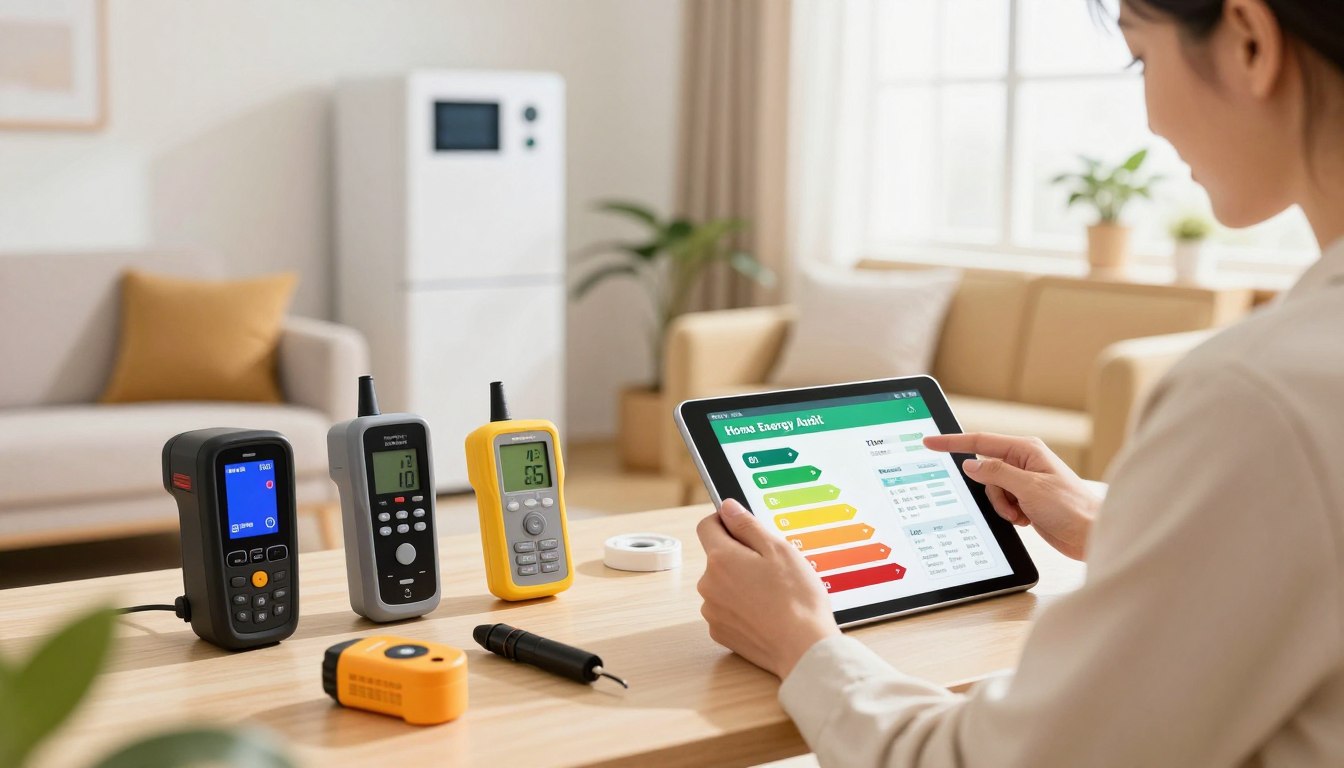
    A residential energy auditor is inspecting a cozy living room, filled with natural light streaming through large windows. In the foreground, a middle-aged professional wearing a tailored business attire is holding a clipboard and discussing energy efficiency features with a homeowner, who is attentively listening. The living room is decorated with energy-efficient LED lights, houseplants, and a smart thermostat prominently displayed on the wall, indicating a focus on sustainability. In the middle background, a wall-mounted energy monitor showcases real-time usage data. Soft, warm lighting creates an inviting atmosphere, emphasizing a sense of trust and collaboration. The camera angle is slightly elevated, capturing both the auditor and homeowner in a dynamic yet professional setting, showcasing the importance of home energy audits in a modern residential space.

    What is a residential energy evaluation?

    A residential energy evaluation is a detailed check of your home. Experts look at your walls, windows, doors, and roof. They also check your heating, cooling, and water systems.

    Special tools help auditors find invisible problems. They search for insulation gaps and air leaks. This thorough method makes sure nothing is missed.

    Why your home performance matters

    Understanding home energy performance is key for a comfortable home. Poor performance means you’re wasting money on energy that escapes. This costs you every month.

    Spotting these issues lets you make smart improvements. Sealing leaks or updating old appliances saves money and energy. Taking control of your energy usage keeps your home comfortable for years.

    Top Benefits of Scheduling an Energy Audit

    Did you know that money is literally leaking out of your walls every month? Understanding the benefits of energy audits is key to saving money and helping the environment.

    Lowering your monthly utility bills

    A professional assessment can cut your monthly bills right away. It finds where your home loses heat or cooling. This lets you fix the most cost-effective problems.

    Small fixes, like sealing windows or adding attic insulation, can greatly lower your bills. These changes help your HVAC system work less hard, saving energy.

    Improving indoor air quality and comfort

    An audit also makes your home healthier. Sealing air leaks keeps out dust, allergens, and pollutants. This makes your home a cleaner place to live.

    With sealed air leaks, your home stays at a steady temperature. No more cold spots in winter or stuffy rooms in summer. Your home will feel more comfortable all year.

    Increasing your home’s resale value

    Knowing the importance of home energy audits is key if you plan to sell. Today’s buyers want energy-efficient homes.

    A certified energy-efficient home is a big plus in the market. Upgrades can help you ask for a higher price. They attract buyers who care about saving money and the planet.

    The Step-by-Step Home Energy Audit Process

    To get the most out of your energy efficiency assessment, start by preparing a few things before the auditor comes. Make sure your home is ready for them to check every area easily. This way, the expert can focus on finding leaks and improving efficiency without any hitches.

    Preparing for your professional assessment

    First, collect your utility bills from the last year. This gives a clear view of how much energy you use. Next, tidy up your attic, basement, and crawl spaces. These areas are key for the inspection.

    Make sure your furnace, water heater, and electrical panel are easy to reach. This saves time and lets the auditor work better.

    Common diagnostic tools used by auditors

    Experts use special tools to find what we can’t see. A blower door test is a key part of the home energy audit process. It makes your house less pressurized to show air leaks.

    Infrared cameras are also used. They show where heat is escaping through walls, windows, and ceilings.

    These tools give precise data on where your home loses air. Knowing this helps you understand where your money is going. This step is key to planning your home improvements.

    Reviewing your personalized energy audit checklist

    After the inspection, you’ll get a home energy audit checklist made just for you. This list shows you which upgrades to do first. It ranks tasks by how much they’ll save you on bills and comfort.

    Start with the most important tasks, like sealing gaps or adding insulation. Following this customized guide will make your home more efficient and save you money. By doing these tasks, you’ll make your home better for the planet and your wallet.

    Conclusion

    Turning your home into a high-performing space starts with knowing how you use it. Finding hidden leaks and inefficiencies saves you money in the long run. The cost of an energy audit is worth it when you see your bills drop.

    By making these changes, you also protect your home and make it healthier for your family. This reduces your carbon footprint too. Looking at the cost and savings helps you choose the best projects first.

    Getting a professional to assess your home gives you a plan for lasting comfort and savings. Your home should work as hard as you do to stay efficient. Contact a certified expert today to start your path to a greener future.

    FAQ

    What exactly are home energy audits explained for the average homeowner?

    A home energy audit is like a health check for your house. It looks at how your home uses energy and where it wastes it. By understanding this, you can find and fix problems like thin insulation or leaky windows.
    This helps lower your energy bills. Home energy audits give you a plan to save money and live more sustainably.

    What should I expect during a professional energy efficiency assessment?

    A certified technician will visit your home during an energy audit. They use special tools to check your home’s energy use. This includes tests to find air leaks and see heat loss.
    They check your thermostat and HVAC system to make sure they’re working well. This ensures your home is comfortable and efficient.

    What are the most significant benefits of energy audits for my household?

    Energy audits improve your home in three ways: comfort, health, and money. They help keep your home warm in winter and cool in summer. This makes your home more comfortable.
    They also keep pollutants and allergens out, improving your air quality. Homes that are energy-efficient can sell for more, making them a smart investment.

    How do the energy audit cost and savings actually work in the long run?

    The cost of an energy audit is worth it in the long run. Homeowners who make the suggested changes save 5% to 30% on their bills. This can pay for the audit and improvements over time.
    These savings put more money in your pocket each month.

    Is there a specific home energy audit checklist I should use to prepare?

    Yes, prepare for your energy audit by gathering some information. You’ll need your utility bills, a list of uncomfortable rooms, and access to your attic and appliances. This helps the auditor give you the best advice for your home.
  • How Smart Thermostats May Help Manage Energy Use and Save

    How Smart Thermostats May Help Manage Energy Use and Save

    Did you know that heating and cooling make up nearly half of the typical utility bill in the United States? This fact shows a big chance for homeowners to save money.

    Modern climate control opens the door to a more efficient home. By updating your system, you unlock advanced features that do more than just adjust the temperature.

    These devices watch your habits to cut down on your monthly bills. Knowing the core value proposition of this tech helps you find a balance between comfort and saving energy.

    You can now control how much energy your home uses. Learning about the benefits of smart thermostats for saving energy is the first step to a greener home. Using these tools is a sure way to cut down on energy costs with smart thermostats.

    Key Takeaways

    • Heating and cooling are the biggest parts of household utility costs.
    • Modern climate devices offer active monitoring, not just temperature control.
    • Technology helps find a balance between comfort and saving the environment.
    • Automated changes lead to big savings over time.
    • Controlling your climate settings lets you reduce your carbon footprint.

    Understanding How Smart Thermostats May Help Manage Energy Use

    Smart thermostats have come a long way from the old manual dials. These outdated devices often wasted power when you were away or asleep. Now, technology has advanced to make managing energy use easier.

    A modern living room featuring a sleek, smart thermostat prominently displayed on the wall. In the foreground, a professional individual, dressed in smart casual attire, is adjusting the thermostat with a focused expression. In the middle ground, stylish furniture, such as a cozy sofa and a coffee table with energy-saving gadgets, conveys a sense of modern living. The background shows a large window with natural light streaming in, illuminating the space and enhancing the warm atmosphere. Soft shadows add depth to the scene. The overall mood is one of efficiency and comfort, illustrating how smart thermostats can optimize energy use in a home environment. The image should be bright and inviting, with attention to detail in the decor and functionality of the thermostat.

    The Shift from Manual to Automated Climate Control

    Automation has changed how we control our homes. Energy-efficient smart thermostats learn your habits and adjust the temperature for you. They only run when needed, saving energy.

    Forget to turn down the heat? No problem. The system does it for you. This makes your home comfortable without you lifting a finger. It’s a big step towards modern comfort.

    How Connectivity Transforms Your HVAC Efficiency

    What makes smart thermostats special is their constant connection. Link your system to your phone and control your home’s climate from anywhere. This lets you keep an eye on your energy use and save money.

    With smart home technology for energy efficiency, your HVAC talks to your phone. Get alerts, track energy, and adjust settings on the fly. This connection helps you make smart choices about energy use.

    Feature Manual Thermostat Smart Thermostat
    Temperature Control Manual Adjustment Automated Learning
    Remote Access None Smartphone App
    Energy Reporting Not Available Real-time Data
    System Integration Standalone Smart Home Ecosystem

    Five Key Ways Smart Thermostats Optimize Your Home Energy

    Modern homes do better with smart ways to control heat and cool. Using energy management with smart thermostats cuts down your bills and keeps your home comfy. These devices make sure your HVAC system only works when you’re home.

    Learning Your Daily Schedule for Precision Heating and Cooling

    Smart thermostats save energy by learning your daily habits. They don’t need you to set the temperature manually. Instead, they adjust based on when you wake up, leave, and come back.

    “The most efficient energy is the energy you don’t use when you aren’t there to enjoy it.”

    Utilizing Geofencing to Prevent Wasted Energy

    Geofencing uses your phone’s location to save energy. When you’re near, your thermostat turns off the heat or cool. This keeps your home comfy without wasting energy when you’re not there.

    • Automatic adjustments: The system changes the temperature based on your location.
    • Peace of mind: You don’t have to worry about forgetting to turn off the heat.
    • Seamless transition: Your home is just right when you arrive.

    Accessing Real-Time Energy Usage Reports

    Knowing your energy use is key with smart thermostats. They show you how much energy you use every day. This helps you spot patterns and make changes to save more money.

    Integrating with Smart Home Ecosystems for Better Control

    Linking your thermostat to a smart home system makes controlling your home easier. You can change the temperature with voice commands or an app. This makes your home more efficient and saves you money.

    Taking Advantage of Utility Demand Response Programs

    Many utilities offer programs for using less energy during peak times. These smart thermostat advantages let your utility make small changes to your settings. You get credits or other benefits on your bill.

    Choosing the Right Technology for Your Energy Goals

    Before you upgrade your climate control, make sure your system is ready. The right device is key to saving energy, as not all systems fit every home. By choosing wisely, you can get energy-efficient smart thermostats that save you money.

    Evaluating Compatibility with Your Existing HVAC System

    Start by checking your HVAC system’s wiring and voltage. Many old homes lack a “C-wire,” needed for constant power. Always check your wiring before buying to avoid problems.

    Most devices need a 24V system. If you have high-voltage heating, you’ll need a special model. Checking compatibility saves you from buying the wrong device.

    Prioritizing Features That Match Your Lifestyle

    After checking compatibility, focus on features that fit your lifestyle. Think about your daily routine and how you use your home. If you travel a lot, look for geofencing to save energy when you’re away.

    When comparing models, look for these key smart thermostat features for energy control:

    • Adaptive Scheduling: Devices that learn your habits.
    • Remote Access: Apps that let you adjust settings from anywhere.
    • Usage Reports: Insights to find high-consumption times.
    • Ecosystem Integration: Works with voice assistants like Alexa or Google Home.

    By choosing features that match your needs, you get a system that supports you. Researching these options helps your new tech meet your sustainability goals.

    Conclusion

    Modern living needs a smarter way to manage household resources. Switching to automated climate systems lets you enjoy comfort while saving money in the long run.

    You can make a big difference by using smart thermostats to save energy. Brands like Ecobee and Nest make it easy for homeowners to start saving.

    By using smart thermostats, you can cut down on energy costs. You get to see how much energy you use, helping you change your daily habits.

    Look into the features of your smart thermostat for better energy control. Even small changes can lead to big savings on your bills.

    Choosing smart home tech for energy savings is a step towards a greener future. Begin your journey today for a more comfortable and affordable home.

    FAQ

    How smart thermostats may help manage energy use more effectively than traditional models?

    Smart thermostats like the Google Nest Learning Thermostat are smarter than manual dials. They learn your daily routine with advanced algorithms. This means they can lower the temperature when you’re asleep or at work, saving energy without your effort.

    What are the primary smart thermostat advantages for energy management in a busy household?

    Smart thermostats offer a big advantage over manual controls. They use smart home tech to manage your HVAC system from your phone. Brands like ecobee use sensors to find occupied rooms, saving you money by not heating or cooling empty spaces.

    How does geofencing work to assist in reducing energy costs with smart thermostats?

    Geofencing uses your phone’s GPS to set a virtual boundary around your home. When you leave, your Honeywell Home T9 switches to “Away” mode, saving energy. This is a key feature for controlling energy use, as it stops unnecessary heating or cooling while you’re out.

    Can I monitor my progress when optimizing energy usage with smart thermostats?

    Yes, you can. Modern systems like the Amazon Smart Thermostat give detailed energy reports through apps. These reports help you see when and where your home uses the most power. This info lets you make better choices about heating and cooling, saving money over time.

    How do utility demand response programs integrate with smart home technology for energy efficiency?

    Demand Response programs from utility providers reward you for using less energy during peak hours. By linking your ecobee Premium or Nest to these programs, your thermostat can adjust settings to help the grid. This not only saves energy but can also earn you rebates or credits on your bill.

    What should I check to ensure compatibility before investing in energy-efficient smart thermostats?

    Before buying, check if your HVAC system needs a C-wire for continuous power. Many smart thermostats are easy to install, but verifying your system’s voltage and wiring is key. This ensures you get the most out of your smart thermostat without technical issues.
  • Top Technical Skills Worth Learning for Modern Workplaces

    Top Technical Skills Worth Learning for Modern Workplaces

    Did you know that experts predict 85% of the jobs that will exist in 2030 have not even been invented yet? This is why proactive growth is now a must. To succeed, you need to keep up with the fast-changing economy.

    Learning modern workplace skills helps you stay ahead. By mastering top technical abilities, you become a leader in your field. Employers are looking for people with these current tech talents to tackle digital challenges.

    This guide is your guide to finding key skills for your career. Investing in your future begins with choosing the right skills to improve your career now.

    Key Takeaways

    • Understand why continuous adaptation is essential for long-term career success.
    • Identify the most in-demand digital competencies across various industries.
    • Learn how to leverage new abilities to solve complex business challenges.
    • Discover strategies to remain competitive in a rapidly evolving job market.
    • Position yourself as a forward-thinking professional ready for future roles.

    Essential Technical Skills Worth Learning for Modern Workplaces

    Today’s workplace needs more than just basic computer skills. The Technical Skills Worth Learning for Modern Workplaces are key for growth and efficiency. They help professionals stay ahead in their careers.

    A visually engaging representation of essential technical skills for modern workplaces. In the foreground, display a diverse group of three professionals in smart casual attire, interacting with a digital tablet and a laptop. The middle layer features floating icons symbolizing vital skills such as coding, data analysis, cloud computing, cybersecurity, and project management, visually connected by lines of light. In the background, a modern office setting with sleek furniture, large windows revealing a cityscape, and soft, ambient lighting creates a productive atmosphere. The composition should suggest collaboration and innovation, with warm color tones enhancing the motivational mood of the scene. Capture the image from a slightly elevated angle to emphasize the teamwork and dynamism of the environment.

    Data Literacy and Analytics

    Data is now a major part of business. Learning data literacy lets you understand and use data to solve problems. This skill helps you make informed, strategic decisions that benefit your company.

    You don’t need to be a data expert to use these skills. Knowing how to use tools like Excel or Tableau helps you spot trends and opportunities. This skill is valuable in all departments, from marketing to HR.

    Cloud Computing Proficiency

    Cloud computing is essential for remote and hybrid work. Learning about cloud platforms like AWS or Google Cloud lets you work from anywhere. It’s a key skill for today’s professionals.

    Cloud skills help you access files and manage projects from anywhere. It makes work more flexible and secure. Employers look for candidates who are comfortable working in the cloud.

    Artificial Intelligence and Machine Learning Basics

    Artificial intelligence is changing the workplace today. You don’t need to code to be relevant. Understanding AI tools can help you automate tasks and boost creativity.

    These in-demand technical skills let you focus on important tasks. Learning about AI and machine learning makes you a valuable team member. Staying up-to-date with these technologies can give you an edge in the job market.

    Skill Category Primary Benefit Common Tools Career Impact
    Data Analytics Informed Decisions Tableau, Excel High
    Cloud Computing Remote Flexibility AWS, Azure High
    AI Basics Process Automation ChatGPT, Copilot Very High

    Soft-Tech Hybrid Skills for Career Growth

    Getting a mix of skills is key to keeping up in today’s job market. Knowing tech is good, but working well with others is even better. These in-demand technical skills help you deal with digital challenges and keep the team working together.

    Cybersecurity Awareness

    You’re a big part of keeping your company safe online. Cybersecurity is important for everyone, not just IT. By being careful, you help keep company data safe from hackers.

    • Practice strong password management using encrypted vaults.
    • Verify the source of all incoming emails before clicking links.
    • Report suspicious network activity to your security team immediately.

    Digital Collaboration Tools

    Good communication is key for teams working apart. Learning to use tools like Slack or Microsoft Teams is a must. These must-have work skills help you stay in touch with your team, no matter where you are.

    The right tools can turn a fragmented team into a cohesive unit, provided the people using them understand how to communicate with clarity and empathy.

    Low-Code and No-Code Development

    Low-code and no-code tools make making software easier. You don’t need a computer science degree to create apps or automate tasks. These current tech talents let you fix problems on your own, saving time and money for your team.

    Skill Category Traditional Approach Hybrid Approach
    Problem Solving Wait for IT support Build custom solutions
    Data Security Passive compliance Active threat detection
    Team Workflow Email-heavy updates Real-time collaboration

    By using these hybrid skills every day, you become more valuable. These tools help you handle tech challenges and keep things running smoothly. This is how you grow your career in the long run.

    Conclusion

    Building a strong career begins with today’s choices. Keeping your skills sharp is key to success in a fast-changing world.

    Focus on modern workplace skills to keep moving up. These skills make you a valuable asset, ready to handle changes easily. They are the base for your growth.

    This guide showed you which skills to focus on first. Learning now will help you advance in your career. Stay updated with new tech trends to stay ahead.

    What skill do you want to learn next? Share your plans with others to stay on track. Your effort in learning will shape your future success.

    FAQ

    Why is it important for me to focus on technical skills worth learning for modern workplaces right now?

    Staying current with modern skills is key to keeping your career strong. Leaders like Microsoft and Google are always changing. Having the right technical skills helps you keep up with job market changes.
    By learning these skills, you become a forward-thinking professional. You can tackle complex digital problems in any setting.

    What makes data literacy and analytics such essential tech skills for my career?

    Data literacy is a critical skill because it lets you understand complex data. Tools like Tableau and Microsoft Power BI help you make smart decisions. This skill is highly valued in today’s tech world.
    Being able to turn data into useful insights is important in all departments.

    How does cloud computing proficiency affect my daily work in a hybrid environment?

    Cloud computing is a must-have skill for today’s workers. Knowing platforms like AWS or Azure lets you work from anywhere. This skill is key for working well in distributed teams.

    Do I need to be a software engineer to benefit from AI and machine learning basics?

    No, you don’t need to be a software engineer to learn AI basics. Understanding tools like OpenAI’s ChatGPT or Adobe Sensei is valuable. It helps you automate tasks and stay ahead without needing a computer science degree.

    Why is cybersecurity awareness considered one of the must-have work skills for everyone?

    Every employee plays a role in protecting company data from digital threats. Learning about cybersecurity helps you keep information safe on platforms like Salesforce or Slack. It’s a critical skill that connects basic digital knowledge with advanced security.

    How can low-code and no-code development enhance my current tech talents?

    Low-code and no-code tools, like Zapier or Bubble, let you create apps and workflows easily. You don’t need to know how to code. These skills make you versatile and valuable in solving business problems quickly.
    Learning these skills keeps your career growing and strong against changes in the industry.
  • How to Prepare for a Career Change Your Step-by-Step Guide

    How to Prepare for a Career Change Your Step-by-Step Guide

    Did you know the average person spends over 90,000 hours at work? This huge amount of time makes many people want a change. How to Prepare for a Career Change well is key to a smooth transition.

    Success isn’t just about updating your resume. You need a strong mindset to handle the challenges of changing careers. Think of preparing for a new career as a long journey, not a quick race.

    Patience and careful planning are your best friends on this path. By following a clear plan, you’ll be ready for what’s ahead. This guide will help you build a lasting career.

    Key Takeaways

    • Acknowledge that professional pivots require patience and long-term planning.
    • Maintain your confidence by focusing on transferable skills during the transition.
    • Treat your job search as a marathon to avoid burnout.
    • Develop a structured plan to navigate industry complexities.
    • Prioritize deliberate actions over impulsive decisions.

    Assessing Your Readiness and Motivations

    Starting a new career is more than just updating your resume. It’s about understanding your personal reasons for change. How to Prepare for a Career Change starts with looking back at your past. This helps build a strong base for your future.

    A confident professional woman in a cozy, modern office setting, thoughtfully assessing her career options. In the foreground, she sits at a sleek desk with an open laptop displaying a career assessment tool, surrounded by colorful sticky notes and a notepad filled with ideas. The middle ground features a softly lit bookshelf filled with motivational books, while a green potted plant adds a touch of freshness. The background reveals a window with a city skyline, symbolizing new opportunities. The warm, ambient lighting creates an inviting mood for reflection and determination. The woman is dressed in smart casual attire, exuding professionalism and readiness for change. The composition is shot from a slightly elevated angle, emphasizing her contemplative expression.

    Identifying Your Core Reasons for Leaving

    First, figure out why you’re unhappy in your current job. Often, it’s because of specific problems that have built up. Knowing these issues helps you avoid making the same mistakes again.

    Here are some common reasons people want to change careers:

    • Lack of growth opportunities or stagnant career progression.
    • A misalignment between your personal values and the company culture.
    • Burnout caused by an unsustainable workload or poor management.
    • A desire for more creative freedom or intellectual stimulation.

    Evaluating Your Current Skills and Transferable Strengths

    Many people don’t realize how valuable their skills are. When looking for career transition tips, remember your skills are more versatile than you think. You have a mix of skills that can be used in new industries.

    Use the table below to check your skills and see how they can be used in a new role:

    Current Skill Context Transferable Strength
    Project Management Tech Operations High (Cross-industry)
    Client Relations Sales/Retail High (People-focused)
    Data Analysis Finance High (Strategic)

    Defining Your Ideal Work Environment and Values

    Finding a workplace that matches your values is key to long-term happiness. When looking for changing careers advice, think about where you work best. Do you like the fast pace of startups or the stability of big companies?

    Think about what matters most in your work. Defining your non-negotiables—like remote work or team structure—will help your search. True career change readiness means knowing what you need to thrive, ensuring your next job is fulfilling.

    How to Prepare for a Career Change Through Strategic Planning

    A good plan is key for a smooth career change. It breaks down a big task into smaller steps. Using career transition tips helps you stay focused and keep moving forward.

    Researching Target Industries and Roles

    First, learn about your new field. Good job change preparation means studying trends and what employers want. Use LinkedIn or industry journals to find out what companies need.

    Conducting Informational Interviews with Industry Insiders

    Talking to people in your dream job is very helpful. Ask for short chats with professionals in your field. This career switch guidance gives you a real look at the job, beyond job descriptions.

    Setting Realistic Milestones for Your Transition

    Divide your journey into smaller steps to avoid burnout. A timeline helps you see your progress and make changes if needed. Consistency is key for a big career change.

    Short-term goals for immediate progress

    Start with small wins to boost your confidence and network. Update your bio, attend webinars, or meet new contacts. These small achievements motivate you for bigger success.

    Long-term objectives for career stability

    Short-term tasks give you momentum, but long-term goals ensure career stability. Think about your goals in two or three years and plan backward. Preparing for a new career is a long journey, so keep your eyes on your ultimate goal.

    Building Your Professional Toolkit for a New Industry

    Changing careers needs more than just a dream. You need a solid plan and a new set of professional tools. With a good plan, you can create assets that make you stand out to recruiters. Following changing careers advice helps make your transition smooth and successful.

    Updating Your Resume to Highlight Transferable Skills

    Your resume is your first chance to impress a hiring manager. Instead of listing old jobs, focus on the transferable skills you have. This is key to job change preparation.

    Look at the skills needed in your new field, like project management or data analysis. Show how your past experiences match these needs. Tailoring your resume shows you get the job’s demands, even if you’re coming from a different background.

    Optimizing Your LinkedIn Profile for Your New Path

    Your online presence is like a 24/7 billboard for your career. When transitioning to a new job, update your headline and summary to show your future goals. Use industry-specific keywords so recruiters can find you.

    Share content related to your new industry to show your interest and knowledge. By commenting on trends, you build credibility before applying. Consistency is key when showing you’re serious about a career change.

    Upskilling Through Certifications and Online Courses

    Closing the knowledge gap is essential. Getting certifications or online courses gives you the skills needed for your new role. These prove your dedication to learning and growth.

    Use platforms like Coursera or LinkedIn Learning to learn new skills. Choose certifications that employers value in your field. This effort can give you the edge you need to get an interview.

    Networking Within Your New Professional Community

    Building relationships is key to finding opportunities. When looking for switching professions tips, connect with people in your desired field. They can share insights you won’t find in job descriptions.

    Go to webinars, join associations, or ask for informational interviews. Be curious and respectful when asking about their experiences. Networking gives you a real view of the industry and helps you find support for your transition.

    Conclusion

    Starting a new career path takes courage and a clear goal. You now have the tools to move forward with purpose and clarity.

    Good career advice helps make your dreams come true. You’ve identified your strengths and matched them with your goals. This solid foundation will help you succeed in the future.

    Changing jobs takes time and effort. Keep improving your approach as you learn more about your new field. Every time you use these tips, you get closer to your goal.

    Learning these tips helps you adjust to new market needs. Stay curious and grow your network on sites like LinkedIn. Your hard work will lead to great opportunities.

    Start your new career today with your plan. This journey is worth it. Share your progress with mentors or friends to stay motivated.

    FAQ

    What are the most effective career transition tips for someone just starting the process?

    To start a career transition, mix self-reflection with research. Use Glassdoor to learn about your target industry’s culture and salary. Building a support system is key; mentors can guide you through the process.

    Where can I find reliable changing careers advice if I feel stuck in my current role?

    For changing careers advice, turn to industry leaders and educational sites. General Assembly and Coursera offer great resources. Reading Harvard Business Review can also help you manage career change stress.

    How can I improve my job change preparation while working full-time?

    Make job change prep part of your daily routine. Spend thirty minutes a day on upskilling or networking. Use LinkedIn Learning during your commute to improve your skills gradually.

    Is it necessary to seek professional career switch guidance?

    Getting professional career switch guidance can speed up your transition. Career coaches at BetterUp can highlight your transferable skills. They help you present your best self to recruiters at big companies.

    What is the most important factor in transitioning to a new job successfully?

    The key to a successful job transition is showing how your past experiences fit your new field. Focus on transferable strengths like project management. A hybrid resume can showcase these skills well.

    How do I know if I have achieved career change readiness?

    Check your network and financial safety net to gauge career change readiness. A strong LinkedIn network and a financial cushion are key. Knowing your “why” for the change is also important.

    What should I focus on when preparing for a new career in a competitive field?

    In competitive fields like tech, build a portfolio to show your skills. Use GitHub for coding or Behance for design. Employers at top firms like Adobe or Meta look for practical skills.

    Do you have any specific switching professions tips for someone over 40?

    For those over 40, focus on your soft skills and leadership. Your experience in managing teams is valuable. Network at industry events and stay updated with Forbes or Fortune to show your business savvy.